Wensley Wilson
Arthur Parker Hawkins
23rd of February 1907, My great grandfather John's younger brother Arthur P.Hawkins, murdered his older sister Mary Ann P.Alpe. Arthur was remanded in custody on the 26th of February, and put in a plea of "Not Guilty".
CHARGE OF MURDER IN WALWORTH.
At Lambeth, Arthur Parker Hawkins, 36, described as a labourer, of Great Suffolk-street, Borough, was charged before Mr.Hopkins with the murder of his married sister, Mary Ann Alpe, at South-street, Walworth. It is alleged that, after a quarrel over money matters, the prisoner on Saturday night stopped his sister in South-street, and stabbed her. The prisoner was arrested some hours later. It is stated that for some 12 years he had served in the Royal Field Artillery and had seen service in the south African war. Detective-sergeant Barrett proved the arrest. Mr.Hopkins. -Do you want to ask any questions at present, Hawkins? The prisoner.-No, Sir. I know nothing about this stabbing affair. I plead not guilty to it. Mr.Hopkins directed a remand.
An inquest was held a few weeks before the trial and is outlined in the South London Press article transcribed below.
THE INQUEST.
THE MAN'S STATEMENT.
VERDICT AGAINST AN "UN-KNOWN"
On Tuesday Mr.G.P Wyatt, coroner, held an inquest at the Newington Coroner's Court on the body of Mary Anne Alpe, aged 48 years. The wife of John Alpe, an iron moulder, living at 85.South-street, Walworth, who was fatally stabbed outside her own home.
Arthur Parker Hawkins, a labourer, of Great Suffolk-street, Borough, brother of deceased, who stands remanded from the Lambeth court on the capital charge, was present in court in charge of two warders from Brixton Prison.
Detective-inspector Knell watched the case on behalf of the police.
The husband said that about 8 o'clock on Saturday night he was at home, deceased having gone out with a daughter a quarter of an hour earlier. She returned with the accused (her brother), and upon entering the passage she said to witness, "He's come for a shilling." Accused said, "That is no good. I want 4s or 5s." Witness said he had none to give him, and told the accused to clear out. He (the accused) then went away. A few minutes later deceased went to join her daughter, who was waiting for her in the public-house close by. Witness had hardly reached the kitchen when he was informed by a woman that deceased had been stabbed. He ran out and called the police, who went for an ambulance, and deceased was taken away, previous to which a medical man was called.
The Coroner: Did you ask how it happened?
Witness: Yes, a number of different stories were told in the confusion. The accused had been a source of great annoyance to them.
The Coroner: Why should he come?
Witness: I cannot say. I have many times lent him shillings.
Coroner: What was he?
Witness: A general labourer.
The Coroner: That means nothing. Was he in work?
Witness: No.
The Coroner: Had there been any previous bothers because you would not lend him money?
Witness: Yes. Last Christmas he abused me shocking when I got my money out of a slate club.
By the Coroner: Witness was under no obligation to the accused whatever. The rest of the family were on good terms with the deceased. The accused was a driver in the Artillery during the Boer War. Witness got accused a job on his return.
The Accused: He's making out that I did not work at all, and that I went round demanding money. I have only been out of work five weeks, and used to work for the same firm as the last witness, Badcock and Wilox, also for the Stepney Borough Council.
Louisa Alpe, a daughter, stated that on Saturday evening she went out with the deceased to the Princess of Wales, in South-street, where they had some refreshment. The accused called them, and said to the deceased, "I want some money." She replied, "I haven't got a farthing on me." The Accused then said, "Is Jack (the husband) in?" He added, "I will go and see him." Deceased said, "I will come with you." and they went away together, and witness shortly afterwards left the house with her young man. Witness did not again see deceased.
Lillian Frances Wright, of 104 South-street, said that she knew deceased as a neighbour 12 months. On Saturday night about 7.45 she went with an aunt to the Princess of Wales, where they had a glass of ale each. She saw someone look in at the door and the deceased and her daughter, who had been standing at the bar, went out. Witness heard nothing said whatever. She could not say who it was looked in at the door. A short time afterwards deceased came back and said, "That was my brother. He is always demanding money when he comes down." They left the house together, and wished deceased "Goodnight." Witness and her aunt crossed the road. Almost immediately afterwards they saw a man go up to the deceased. Witness heard the latter say, "All I have is a farthing." The man started punching her. Deceased cried "Oh! Oh!" and witness's aunt then ran to the deceased and witness went to inform the husband that someone was knocking deceased about. Witness then went home, as she felt so queer. Her aunt came in a few minutes after, and said, "Fancy the poor woman being knocked about like that."
By the Coroner: Witness did not see the man except from the opposite side of the road. It was dark at the time.
Emily Robinson, of 183 Trafalgar-street, Walworth, aunt of last witness stated that she saw a man knocking deceased about. She ran across the road and said, "You are a vagabond," whereupon he took to his heels and ran down Thornton-street. Witness caught hold of deceased and prevented her from falling. She fastened deceased's cape, which had become undone, and deceased said, "The police will never catch him now." She walked three or four paces and sank to the ground. A police-constable then came up, and a mob collected. The man who assaulted deceased wore dark clothes and wore a cap as far as she could see.
Police-constable Pierce, 397 I., stated that at a quarter past 8 o'clock on Saturday night he was on duty in South-street, when deceased came up to him and said, "My brother has stabbed me in the neck." and fell down. Witness looked, but could see no man about. He sent for a medical man, who said she was suffering from a punctured would in the neck and ordered her removal to the infirmary. Upon arriving there life was pronounced to be extinct. There was some blood issuing from the wound, which witness stopped prior to doctor's arrival. Her clothing was covered in blood.
The Coroner: As a matter of fact, was she not on the ground when you first saw her?
Witness: No. She walked up to me.
By a Juror: Witness heard no scuffling. Two women were with deceased when she made the statement. He did not know who the women were.
The witness Robinson, recalled, said that deceased let go her arm and sank to the ground before the police-constable arrived.
Detective-sergeant Barrett said that he arrested the accused at 87, Great Suffolk-street, Borough, at midnight on Saturday. The accused said, "I was there. I shall what is right at the proper time." Witness searched the accused, and in his left jacket pocket found a pocket-knife. Witness subsequently conveyed him to the Rodney-road police station, where he was charged.
Dr. F.E.Welshman, acting divisional surgeon, of 126 Camberwell-road, stated that on Saturday night he was just leaving Rodney-road police-station, when he heard that a woman had been stabbed in South-street. He accompanied a police-constable to the spot, and saw deceased lying in the road, being supported by a man. Witness examined her and found her to be in a dying state, and then ordered her removal to the infirmary. Witness accompanied the ambulance there, but deceased died on the way. He had since made a post-mortem examination, and found eight distinct punctured wounds on the left arm, shoulder, neck, breast, finger, and chest. The latter had punctured the aorta, and the pericardium was full of blood. The cause of death was syncope from internal haemorrhage, consequent upon the injuries. The bloodstained corsets, which were pierced, were here produced. The wounds, said the doctor, were such as could have been inflicted by the penknife (also produced). He did not think they were self- inflicted.
The accused declined to make any statement.
The jury returned a verdict of wilful murder against some person or persons unknown.
The trial is outlined below in a report in the The Times Newspaper. 25th March 1907. Or a fuller account of testimony given can be found at the Old Bailey Online.
(Before the Lord Chief Justice of England.)
ARTHUR PARKER HAWKINS, 36 labourer, was indicted for the willful murder of Mary Ann Alpe. The prisoner pleaded "Not Guilty."
Mr. Bodkin and Mr.J.F.Tindal Atkinson prosecuted; Mr.S.Ingleby Oddie, at the request of the Lord Chief Justice, appeared for the prisoner.
Mary Ann Alpe, was 48 years of age, was the sister of the prisoner. She was the wife of John Alpe, a working man, and she and her husband resided with their daughter Louise in South-street, Walworth. The prisoner, who was living with a woman named Berry in Southwark, was not in regular employment. He applied several times to his brother-in-law, John Alpe, for assistance and received small sums of money from him to help him. It was stated that on February 23 the prisoner's condition was one of extreme poverty. He and Berry had no money either to pay their rent with or to buy food, and their landlady had given them notice to leave. On that same evening the prisoner went out saying he was going to see Mary to see if he could get 3s.for the rent and for some food. Shortly before 8 o'clock Mrs.Alpe and her daughter went to a public-house. The prisoner, it was stated, put his head in at the door and said to Mrs.Alpe. "Mary, I want you." She did not answer him. Her daughter went to the prisoner, who said he wanted some money. Louisa Alpe told her mother. The prisoner put his head in at the door again and said, "Mary, I want you particularly," and added that he wanted some money. Mrs.Alpe said that she had none and that her husband had not given her any. The prisoner exclaimed, "That is the same tale every time I see you," and he said he would go and see her husband. Mrs.Alpe went with him to her house and told her husband that the prisoner had come for 1s. The prisoner remarked, "A 1s. is no good; I want 4s. or 5s." Mr.Alpe said, "You have come to the wrong place for I want money myself," and he told the prisoner "to clear out." The prisoner went away. Mrs.Alpe returned to the publichouse. It was alleged that the prisoner again put his head into the doorway and said, "You have soon found your pals" - a remark which the prosecution contended indicated that he resented the refusal of the Alpes to give him money. A witness named Pike left the publichouse and went home. He saw a man waiting about outside. Shortly afterwards Mrs.Alpe came out of the Publichouse. Mrs.Robinson, an acquaintance of hers, who had been in the publichouse and who was on the opposite side of the road, heard a scuffle and saw a man holding Mrs. Alpe and apparently striking her in the breast. Mrs.Robinson called out to the man, "You are vagabond." The man thereupon ran away - Mrs.Robinson went to Mrs.Alpe and found that she was in a fainting condition, and that she was bleeding. She collapsed and fell to the ground. A medical man was sent for, but she died. A post mortem examination was made and it was found that she had eight separate knife wounds in the arm, shoulder, neck, breast, finger, and chest, the last-named being the fatal injury, the blade of the knife having penetrated the aorta. The other seven wounds were slight. mrs.Robinson was positive that the man who struck Mrs.Alpe was the prisoner. While the man was striking her she was heard to say, "I have only got a farthing." The witness Pike identified the prisoner from among a number of other men as the man who put his head in at the door of the publichouse and whom he afterwards saw waiting outside. The woman Berry, with whom the prisoner was living, in her evidence before the magistrate, said that when the prisoner returned home that evening he stated that he had asked Mary for 1s. for food and 3s. for rent, but she refused to give it him and that he added, "I have paid her. I don't know whether she is dead or not." Berry now stated that she was very much upset at the time and she did not recollect his saying that, but what he did say was "I have no luck. I could not borrow any money off either of them. Never mind, Mill, the Lord pays all debts and I think He will pay her." When the prisoner was arrested he had a pocket knife upon him, but there were no blood stains upon it nor were there any marks of blood upon his clothing. He sad "I was there. I shall say what is right at the proper time."
The defence was an alibi.
The prisoner was called as a witness and said that after going to Mr.Alpe's house on the evening in question and being told by Mr.Alpe to "clear out," he did not go again to the public-house but went tot he residence of his brother. That was about 20 minutes past8. His brother invited him and Berry to go there to supper, and they went. They returned home at midnight and he was arrested by a detective and told he would be charged with the murder of his sister. He said he knew nothing about it. He had been for 13 years in the Army and had served through the South African war and had two medals and six clasps.
John Hawkins, brother of the prisoner, corroborated the prisoner's statement as to his having called at his house on the evening in question and subsequently had supper there with Berry. He was not sure of the time when the prisoner first came as his clock was stopped, but he believed it was about a quarter to 9. The prisoner and Berry came to supper about an hour afterwards.
Mr.Oddie, in his address to the jury for the defence, pointed out that the case for the prosecution rested almost entirely on the evidence of one witness Mrs.Robinson, who was some distance away from Mrs.Alpe's assailant and did not have a good opportunity of seeing him. The witness's eyesight was, moreover, defective, and she had to wear spectacles. He urged that it was a case of mistaken identity. Although four persons saw the assault Mrs.Robinson was the only one who identified the prisoner, the other three being unable to identify the man.
The LORD CHIEF JUSTICE, in the course of his summing-up, expressed his thanks to Mr.Oddie for his conduct of the defence. The jury retired to consider their verdict, and after about 20 minutes' absence, they returned into Court finding the prisoner Guilty of wilful murder, but they said the crime was committed absolutely without premeditation, and they desired very strongly to recommend him to mercy.
The prisoner, being asked in the usual way whether he had anything to say, replied that he was innocent of the crime. The LORD CHIEF JUSTICE said he would take care that the recommendation was forwarded to the Home Secretary, and so far as he lawfully might he would say to the Home Secretary what he could in his favour, but the prisoner must not count upon it, for in his (the Lord Chief Justice's) judgement the jury could not rightfully have returned any other verdict. He passed sentence of death upon the prisoner.
Arthur was sentenced to death. Another newspaper report, again in the Times, dated April 3rd, tells us that Arthur P. Hawkins was granted a reprieve.
REPRIEVE. Major Knox, governor of Wandsworth Prison, yesterday received a communication from the Home Secretary, stating that, after taking all the circumstances of the case into consideration, he had advised his Majesty to grant a reprieve to Albert Parker Hawkins, the ex-soldier, who was sentenced to death at the last session of the Central Criminal Court for the murder of his sister, Mary Ann Alpe, at Walworth. The jury recommended Hawkins to mercy, on the ground that the murder was unpremeditated. The sentence will be commuted to one of penal servitude for life.
Interestingly... The man mentioned above Arthur in the paper (Edwin James Moore), was roughly the same age, also ex-army, and also convicted of murdering a relative. Why would one man be hanged and the other shown mercy?
After looking for Edwin Moore on the net I found a very brief account of his crime. Apparently Edwin had come home one night after being out drinking and got into an argument with his mother. He threw a lamp at her. It missed, but set fire to other items in the room and Edwin's mother's blouse caught alight to. Edwin is said to have tried to put out the fire. His mother died of her injuries.
Arthur got his reprieve on the grounds that his crime was not premeditated. Was Edwin Moore's crime Premeditated? On the face of it, it doesn't appear to be. Unlike Arthur, Edwin's crime doesn't seem to be a "wilful" act of murder either.
I've only seen the briefest outline of Edwin's story so can't really come to any proper conclusions about him. I only mention his case to show how my curiosity was first sparked. I needed to know more about how & why reprieves were granted!
ReprievesAround 49% of all those sentenced to death for murder from 1900 to 1957 (when the law was changed), were shown mercy and granted a reprieve. This figure really surprised me. It is not so surprising though when you realise that the mandatory punishment for murder was death & that no other sentence was allowed by law. Murder at the turn of the century was not divided into different categories, as it is today. Murder, manslaughter, premeditated and non-premeditated murder all carried the same mandatory sentence. Hence the need for a review of each case, and the "high" number of reprieves.
The Home Secretary was responsible for this process. A Jury could recommend Mercy, but it was the Judges recommendation that carried the most weight and was rarely ignored. Arthur was lucky in that he knew fairly quickly after the trial (10 days) had finished that he was not going to hang. Some had to wait to within a few days of execution to know their fate. Anything up to three weeks.
Did life mean life?Arthur's sentence was changed to life imprisonment. Surely when a walk to the gallows is substituted for life then my first thought was that it must of really meant "life". Or perhaps, at the very least, longer then what we think of as being a life term today. But this is not the case. None served over 20 years. Few over 15. And most served around 10 years.
In 1911, the census shows him to be at Parkhurst prison on the Isle of Wight. Arthur was released in 1922, and went on to marry in 1926 and have at least one more child, born 1927. Arthur died in 1933, aged 63.
Mugshots
From the blackkalendar website.
Arthur Parker Hawkins. Age: 36 (51 after sentence). Date Of Sentence: 18 Mar 1907 (for 14 years, 10 months, 17 days). End Of Full Sentence: 4 Feb 1922.
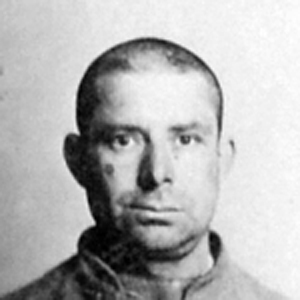

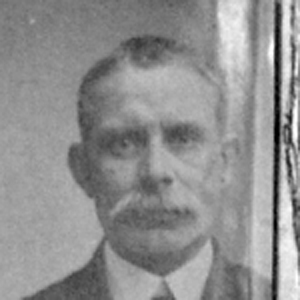

Arthur Parker Hawkins, b.1870, London. Labourer. Height 5'3". Complexion fair or fresh (fr). Hair Brown/grey. Eyes brown.
Appearance marks - scars on face and hands; birthmark right cheek. Tattoos - sailor's head, coat of arms right, several dots, heart and written LOVE left forearm; flag back left hand.
Offence murder. Trial 18/3/07. Sentence death commuted to prison for life. Discharged from Maidstone prison 10/3/22.
Notes for anyone reading the trial at the Old Bailey site
• South Street is now named Dawes Street.
• Thornton Street (the street the attacker ran off in direction of), is now named Wooler Street.
• 73 South Street - Witness location and home, is still standing.
• Public house & the Alpe family home, in South Street, no longer exist. Replaced by flats.